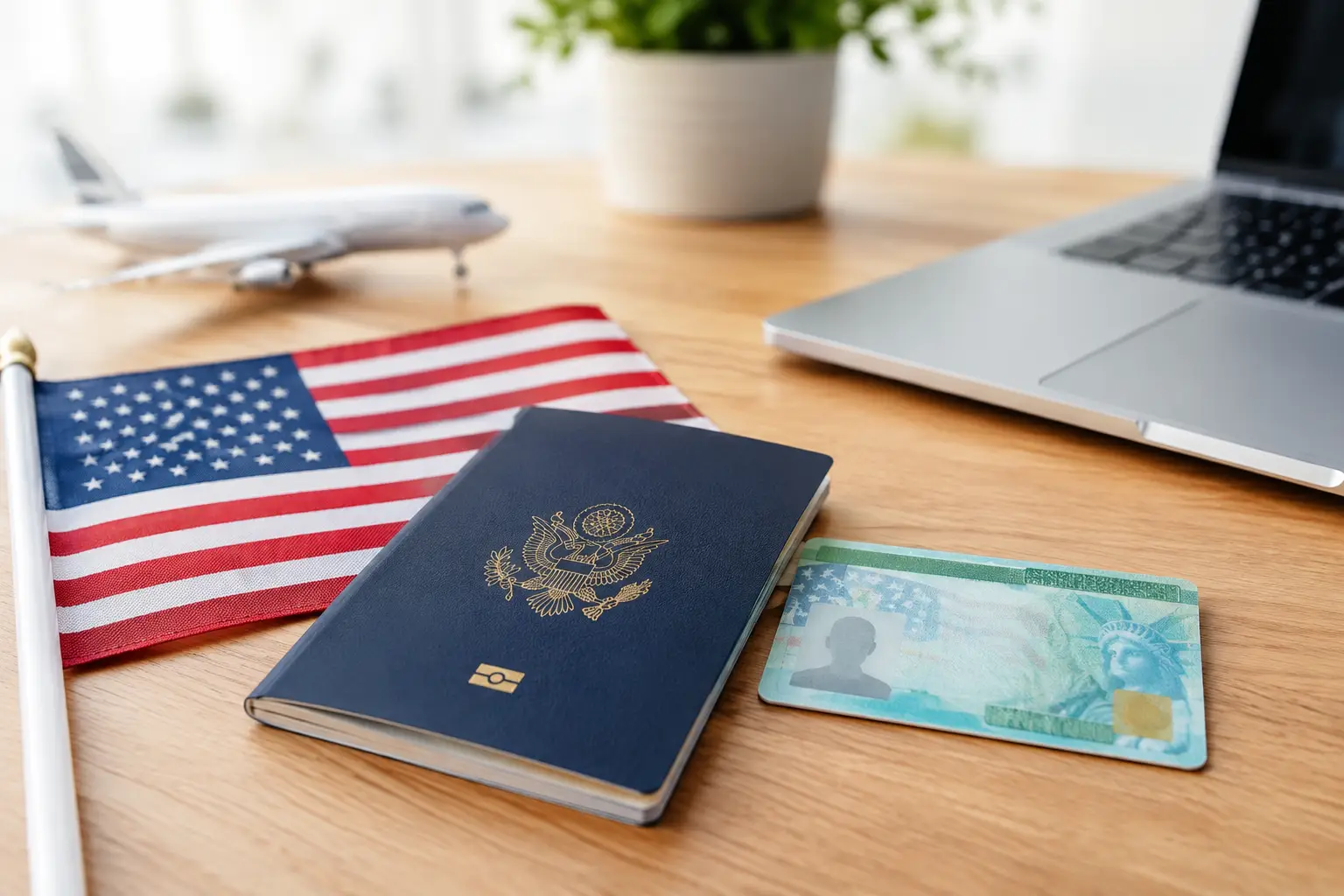
A wedding, a job offer or an unexpected decision to build a life in America can make the quick ESTA route look attractive. But if you are asking, should you go to the US on an ESTA, then switch to a green card or apply via the consulate, the answer turns on one issue above all others: what you intended when you asked to enter the United States.
An ESTA is permission to travel under the Visa Waiver Programme. It is not a visitor visa, a work permit or a flexible preliminary step towards permanent residence. It may be perfectly lawful to visit the United States, experience a genuine change in circumstances and later pursue a green card. It is not lawful to use ESTA admission as a concealed plan to immigrate.
For many people who already intend to settle permanently, consular processing is the cleaner and safer route. The exceptions matter, however, particularly for spouses of US citizens. The right strategy depends on the facts, the evidence and the consequences if a border officer or immigration official doubts your account.
ESTA to green card: the legal distinction that matters
ESTA allows eligible nationals, including most British citizens, to seek admission to the United States for up to 90 days for tourism, certain business activities or transit. Admission is ultimately decided by US Customs and Border Protection at the airport or other port of entry. ESTA approval does not guarantee entry.
A person admitted under the Visa Waiver Programme cannot normally extend their stay or change into another non-immigrant status from inside the United States. That means an ESTA visitor cannot simply convert to an H-1B, L-1, student visa or other temporary category because circumstances become more convenient.
Adjustment of status – the process of applying for a green card while remaining in the United States – is a separate legal mechanism. Certain Visa Waiver Programme entrants may be eligible to adjust, most notably an immediate relative of a US citizen. Immediate relatives include a spouse, unmarried child under 21 or parent of a US citizen aged 21 or over.
Eligibility does not remove the central risk. If you entered on ESTA while already intending to marry and remain permanently, or while intending to file for a green card after entry, officials may conclude that you misrepresented your purpose of travel. A finding of fraud or wilful misrepresentation can have severe and long-lasting consequences, including a potential lifetime inadmissibility ground unless a waiver is available and granted.
When adjustment after ESTA may be credible
Marriage during an ESTA visit is not automatically suspicious, and it is not prohibited. People meet, marry and make major life decisions quickly. The legal question is not simply whether you married within 90 days or filed an application soon afterwards. It is whether your stated purpose at entry was truthful.
For example, a British visitor may enter to spend time with their US partner, planning to return home at the end of the visit. During that stay, an unexpected family event, a medical issue, a changed employment position or a genuine decision to marry may alter the couple’s plans. Where the facts support a real change of intention, adjustment can be a legitimate option.
By contrast, the position is much harder where a couple had already arranged the wedding, ended the overseas tenancy, resigned from work, shipped belongings, or discussed filing a green card application before the visitor travelled. Those facts can conflict directly with a claim that the trip was temporary.
Timing alone is not conclusive. The US Department of State uses a 90-day framework in some consular assessments of misrepresentation. USCIS is not mechanically bound by that framework. Still, filing very soon after entry may draw scrutiny, especially where the wider evidence suggests a settled immigration plan existed beforehand.
A strong case requires consistent evidence. Travel arrangements, messages, employment commitments abroad, accommodation, financial records, wedding planning and the couple’s account of events may all become relevant. There is no advantage in constructing a convenient narrative that documents can later contradict.
Why consular processing is often the safer route
If you already know that you intend to immigrate, applying through the US consulate is generally the more defensible approach. In a family case, the US citizen or permanent resident normally begins with an immigrant petition. Once that stage and the subsequent National Visa Centre process are complete, the applicant attends an immigrant visa interview abroad. They enter the United States as a permanent resident if the visa is issued.
This route is not always quicker, and being apart while a case proceeds can be difficult. For engaged couples, a fiancé visa may be worth assessing. For married couples, the choice may be between a spouse visa route and adjustment from within the United States, but only where the entry history genuinely supports the latter.
Consular processing has important practical advantages. It aligns the application with your known intention to reside permanently, avoids the argument that a temporary entry was used to bypass the immigrant visa process, and usually provides a more predictable framework for travel and planning. It also avoids the particular vulnerability of Visa Waiver Programme entrants, who have very limited rights to challenge removal decisions.
The relevant trade-off is that an applicant waiting abroad may face separation from their spouse or family. They may also be unable to use ESTA to make visits if border officers believe they may not leave at the end of the proposed stay. A pending immigrant petition does not automatically prevent travel, but it makes evidence of a temporary purpose, overseas ties and a credible return plan more important.
Employment cases require particular caution
An ESTA is not a shortcut to a work-based green card. Visitors may undertake limited legitimate business activities, such as attending meetings, negotiating contracts or participating in a conference. They cannot perform productive employment for a US employer, start working remotely from the United States as though based there, or begin operating a US business in a manner that requires work authorisation.
A person who has a potential employer sponsor, an extraordinary-ability case, a national-interest case or an investor strategy should usually decide their immigration route before travelling. Some employment-based applicants may be eligible for adjustment in the United States after a lawful admission, but the Visa Waiver Programme restrictions and the intent analysis still apply. The appropriate answer may instead be consular processing, a temporary work visa, or a carefully sequenced business immigration plan.
Overstaying ESTA is particularly damaging. The authorised period is normally 90 days, with no routine extension. An overstay can end Visa Waiver Programme eligibility and can create further immigration consequences. Remaining in the country while hoping a future application will cure the problem is not a strategy.
Questions to resolve before travelling
Before relying on ESTA where a green card may be in view, examine the position candidly. Ask whether you have already decided to live in the United States, whether you have taken steps consistent with relocation, and whether you could explain your travel purpose truthfully to a border officer.
You should also establish the proposed green card category, whether you are an immediate relative of a US citizen, whether you have previous refusals, overstays, arrests or immigration breaches, and whether any past statement to US officials could conflict with the planned application. These details can change both eligibility and risk.
Do not treat ESTA as a low-stakes test run. Border questioning, a refused entry or an allegation of misrepresentation can affect future travel and an otherwise viable permanent residence case. Equally, do not assume that marriage after arrival makes adjustment impossible. Immigration law is fact-specific, and the distinction between a genuine changed plan and a pre-arranged immigration plan is often decided by the evidence surrounding the trip.
A proper legal assessment should happen before travel, not after a difficult interview or a refusal at the border. Migration USA can assess the intended route, pressure-test the evidence and identify whether adjustment or consular processing better protects your long-term position. The most useful next step is to document the real timeline of your relationship, travel plans and immigration intentions, then obtain advice based on those facts rather than internet shortcuts.
Leave a Reply