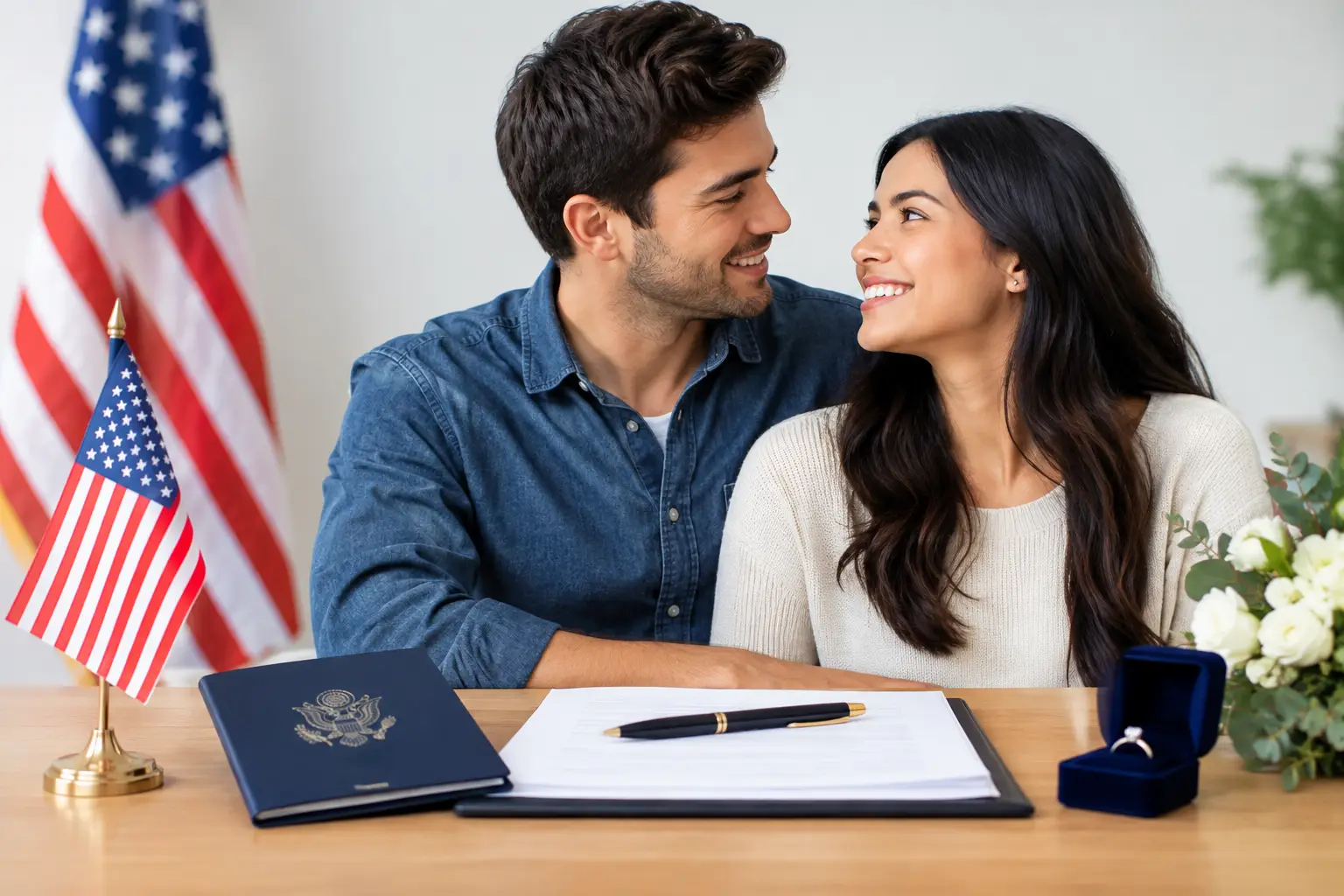
A K-1 visa is often described as the simple route for an engaged couple: apply, travel to the United States, marry within 90 days, then obtain a green card. The reality is more exacting. The US fiancé visa process is a two-stage immigration route, assessed first through a petition and then through a consular application, before a further application for permanent residence after the wedding. A weakness at any stage can create delay, refusal or serious questions about credibility.
For UK and international couples planning a shared life in the United States, the starting point is not paperwork. It is legal diagnosis. The right route depends on where each partner is living, whether marriage abroad is an option, prior immigration history, financial circumstances and the evidence available to establish a genuine relationship.
Who can use the US fiancé visa process?
The K-1 fiancé visa is available only where the sponsoring partner is a US citizen. A lawful permanent resident cannot petition for a fiancé through this route. The couple must intend to marry each other within 90 days of the foreign national entering the United States.
In most cases, they must also have met in person at least once during the two years before filing the petition. There are narrow exceptions, including where a meeting would breach strict cultural or social practices, or cause extreme hardship to the US citizen petitioner. These exceptions are not a substitute for planning and require persuasive supporting evidence.
The central issue is whether the relationship is bona fide. There is no single document that proves this. Officers assess the overall record: how the couple met, how the relationship developed, time spent together, communication when apart, travel, families’ awareness of the relationship, and credible wedding plans. A relationship that is genuine but poorly documented can still face avoidable scrutiny.
A K-1 route is not always the best answer. If the couple are already married, or can reasonably marry outside the United States and wait for immigrant visa processing, a spouse visa may offer a cleaner path to permanent residence on arrival. A K-1 can allow the foreign fiancé to enter before the wedding, but it involves a subsequent adjustment of status application, additional cost and another period of uncertainty.
The K-1 process: petition, consular stage and entry
1. The US citizen files the petition
The process begins when the US citizen submits Form I-129F to US Citizenship and Immigration Services. The petition sets out the legal basis for the case and should be supported by evidence of citizenship, the parties’ freedom to marry, their qualifying in-person meeting and the genuine relationship.
Previous marriages need careful treatment. Divorce decrees, annulments or death certificates must show that each party was legally free to marry. Inconsistencies in names, dates, addresses or relationship timelines should be resolved before filing, rather than explained reactively after an officer identifies them.
The petition is not merely an administrative form. It creates the factual record against which later visa forms and interview answers may be tested. A vague narrative, copied statements or evidence submitted without context can make a straightforward relationship appear less credible than it is.
2. The case moves to the National Visa Centre and embassy
Once USCIS approves the petition, the case is transferred for consular processing. The applicant completes the required visa application, pays the applicable fees, obtains civil documents and attends a medical examination with an approved physician before the interview.
For a UK applicant, this often includes obtaining the appropriate police certificate and ensuring it covers the relevant period of residence. Applicants who have lived in several countries, served in the military or have any arrest history may need additional records. Do not assume that an old caution, charge, overstay or refusal is irrelevant because it occurred years ago or outside the United States.
The financial evidence also matters. The US petitioner must demonstrate that the couple are unlikely to become dependent on public funds, generally through the required support documentation. Where income is borderline, irregular or based outside the United States, the strategy needs closer scrutiny. A joint sponsor may assist in appropriate circumstances, but that does not cure every weakness in the financial record.
3. The consular interview tests the case in person
At interview, the consular officer may ask direct questions about the relationship, the proposed wedding, employment, prior travel, family circumstances and immigration history. The purpose is not to catch applicants out on minor details. It is to determine whether the legal requirements are met and whether the evidence and answers are consistent.
Couples should prepare without rehearsing a script. Natural answers are preferable, but they must align with the case record. If the couple have spent limited time together, have a large age difference, communicate mainly online, share a language barrier, or have previously made immigration applications involving other partners, the case may attract closer examination. None of those facts automatically prevents approval. They do mean the explanation and evidence must be particularly coherent.
An approval also does not guarantee admission. A K-1 holder is inspected by US Customs and Border Protection on arrival. Carrying a clear copy of key case documents and understanding the purpose of travel is sensible, particularly where there have been prior entry issues.
After arrival: marriage is not the end of the immigration case
The couple must marry within 90 days of the K-1 holder’s arrival. This deadline is strict. A wedding ceremony, marriage licence and registration process should be planned realistically, taking account of the requirements in the relevant US state.
The K-1 visa is tied to the US citizen petitioner. If the couple do not marry, or the foreign national instead marries somebody else, the K-1 holder cannot ordinarily use that visa category to adjust status through the new marriage. Remaining in the United States after the permitted period can create further immigration consequences. These are high-stakes decisions and should not be managed through informal advice.
After the marriage, the foreign national typically applies for adjustment of status to become a lawful permanent resident. This is a separate application with separate forms, fees, evidence and adjudication. The couple will again need to show that the marriage is real and was entered into in good faith, not primarily to obtain an immigration benefit.
Depending on the circumstances, the applicant may apply for employment authorisation and advance permission to travel while the green card application is pending. Travel should never be booked on the assumption that permission will arrive by a particular date. Departing without the correct travel authorisation can jeopardise a pending adjustment application, and unauthorised work can create complications.
If permanent residence is granted when the marriage is less than two years old, the resulting green card is usually conditional for two years. The couple must later file a joint petition to remove those conditions, unless a waiver applies. Immigration compliance therefore continues well beyond the wedding day.
The evidence that most often decides a difficult case
Strong cases are organised around a credible timeline, not a random bundle of screenshots. Evidence should show a relationship with real-world substance: travel records and photographs from visits, messages that reflect continuing contact, call logs where helpful, proof of shared plans, statements from people who know the couple, and documentary proof of wedding arrangements where available.
Quality matters more than volume. Hundreds of pages of unlabelled chat extracts can obscure the evidence rather than strengthen it. Conversely, a concise record with dates, explanations and corroborating documents allows an officer to understand the relationship efficiently.
Couples should also identify adverse facts early. These may include prior visa refusals, an allegation of misrepresentation, overstays, criminal history, previous petitions, financial instability, a recent divorce or a relationship that began while one party was visiting the United States. The legal significance varies. Some issues require detailed disclosure, some may require a waiver, and some can change the advisable route altogether.
Timing, planning and professional judgment
Processing times vary between USCIS, the National Visa Centre, the embassy, medical providers and the adjustment stage. No representative can responsibly promise a fixed approval date. What can be controlled is the quality of the filing, the consistency of the evidence and the speed with which the couple respond to requests.
The practical question is not simply, “Can we file a K-1?” It is whether the K-1 is the most suitable route for the couple’s intended timetable, financial position and long-term plans. For some couples, marrying first and pursuing a spouse visa is more efficient. For others, the ability to marry in the United States makes the K-1 route appropriate despite the additional post-arrival process.
A careful legal review before filing can identify issues that generic checklists miss, including whether past conduct creates an inadmissibility concern, whether financial evidence is sufficient and whether the relationship record tells a clear, credible story. Migration USA can assess those issues in an initial consultation before you commit to a filing strategy.
The most protective approach is to treat the fiancé visa as what it is: a legal route built on evidence, consistency and a genuine intention to build a life together, not simply a form to complete before booking a wedding venue.
Leave a Reply