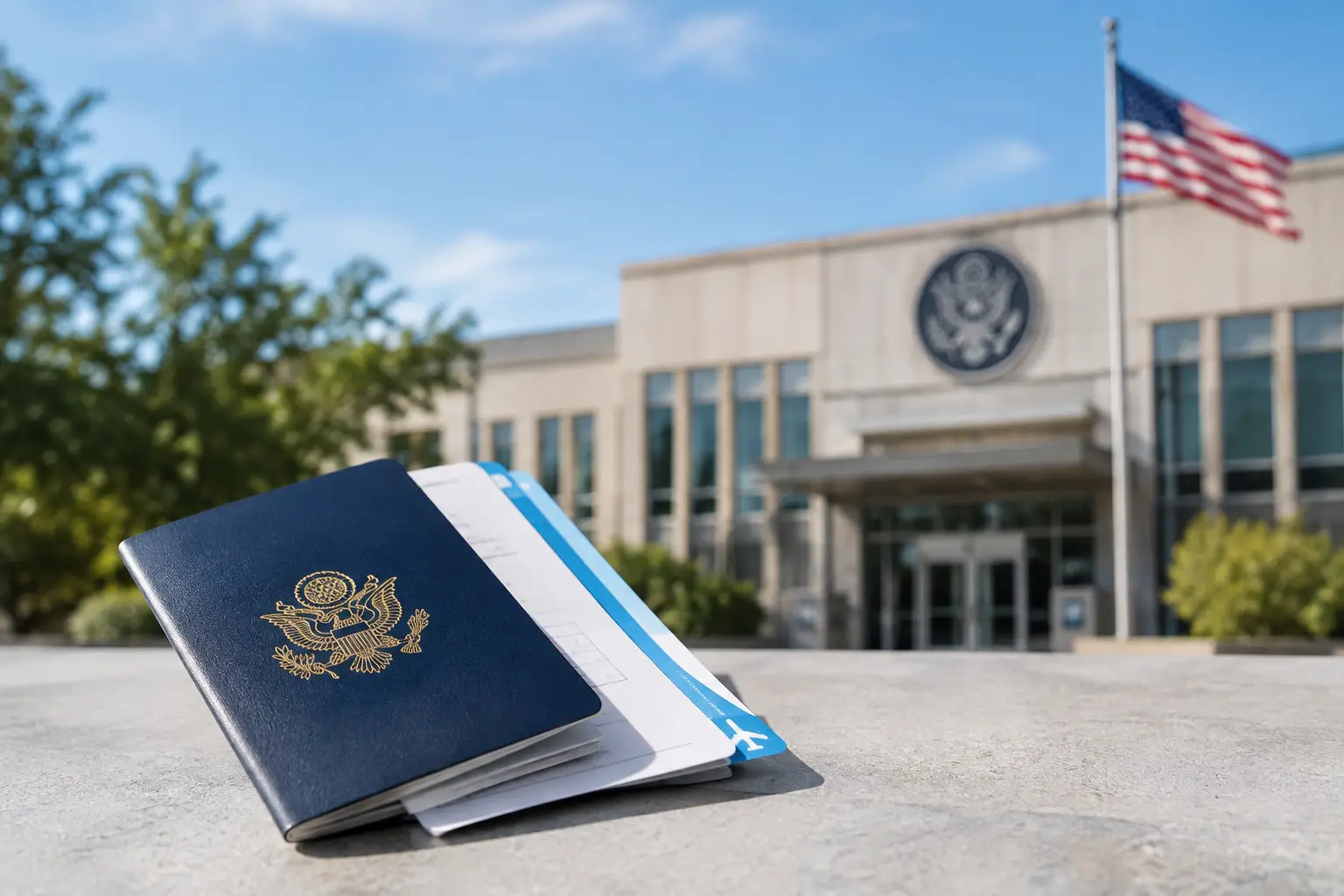
A client may qualify for the same visa category as a colleague, submit the same core forms and attend an interview under the same federal immigration law – yet face a very different experience in London, Paris, Mumbai or São Paulo. So, are all US Consulates the same? Legally, they apply the same U.S. immigration statutes and visa rules. In practice, no. Local operations, appointment capacity, fraud concerns, document expectations and the individual officer’s assessment can materially affect the route a case takes.
That distinction matters. A visa application is not a transaction in which the correct form guarantees the result. It is an evidential case assessed by a consular officer with significant decision-making authority. Treating another applicant’s experience at a different post as a reliable forecast is a common and avoidable mistake.
Are all US Consulates the same in law and practice?
Every U.S. embassy and consulate works within the same federal legal framework. A visitor visa applicant must still overcome the presumption of immigrant intent. An E-2 investor must still show a qualifying treaty nationality, a substantial and at-risk investment, and a real operating enterprise. A spouse seeking an immigrant visa must still establish a genuine legal relationship and satisfy the relevant sponsorship and admissibility requirements.
The governing rules do not change because an application is lodged in one country rather than another. Nor should an applicant assume that a post has invented its own legal test simply because its process feels stricter or more document-heavy.
However, each post operates in a particular local context. Consulates manage different application volumes, staffing levels, security arrangements, language needs and local patterns of fraud or non-compliance. They may publish different administrative instructions, make different use of document collection services, or schedule interviews at very different speeds. Some posts have specialist experience in particular visa types because of their location and applicant population.
The officer also assesses the facts in front of them. Immigration law is national; credibility, evidence and circumstances are personal. Two superficially similar cases can properly receive different outcomes where one applicant gives clear, consistent evidence and the other leaves material questions unanswered.
What can vary between consular posts?
The most obvious difference is appointment availability. Demand for visa interviews can change quickly, and backlogs may be longer for particular categories. This is particularly significant for students with course start dates, businesses transferring senior staff, and families trying to plan a wedding or relocation. A post’s published wait time is useful, but it is not a promise that an application will be decided by a particular date.
Local document procedures can also vary. One post may require civil documents to be uploaded or submitted before the interview; another may inspect original documents on the day. Some posts issue detailed country-specific guidance about police certificates, birth records, translations, photographs or medical examinations. An applicant who follows a checklist intended for another country may arrive unprepared even if their legal eligibility is sound.
Interview style is another variable. Some interviews are brief because the record is strong and the officer can verify the key points quickly. Others probe closely into employment, finances, relationship history, travel, previous U.S. applications, business operations or source of funds. A short interview is not automatically a good sign, and a detailed interview is not automatically a bad one. The relevant question is whether the application answers the legal concerns raised by the category.
Posts also develop familiarity with local industries and case patterns. A consular officer may regularly see applications from technology professionals, seafarers, students, investors or multinational transferees. That experience does not lower the legal standard. It can, however, affect the questions asked and the documentary gaps an officer identifies quickly.
The real issue: your case must withstand scrutiny
For non-immigrant visas, the central risk is often that the applicant has not presented a coherent temporary purpose. A visitor visa applicant may have a credible reason to travel, but weak answers about work, finances, family circumstances or future plans can still lead to a refusal under section 214(b) of the Immigration and Nationality Act. The issue is not whether the officer liked the applicant. It is whether the applicant established eligibility and, where required, sufficiently strong reasons to depart the United States at the end of the authorised stay.
For employment and business visas, officers often test whether the proposed role, employer and applicant’s background align. An L-1 application may raise questions about the qualifying corporate relationship, managerial duties or the capacity of a newer U.S. office. An E-2 case can turn on whether funds were genuinely committed, lawfully sourced and at risk, rather than merely held in a bank account. A strong business plan is useful, but it cannot repair an investment structure that does not meet the legal requirements.
Family cases require the same discipline. A marriage certificate alone does not prove that a relationship is genuine. Officers examine the overall record: how the couple met, how the relationship developed, the evidence of shared plans, prior immigration history and whether the answers given at interview are consistent with the submitted file.
These considerations exist at every post. The practical intensity of scrutiny may differ, but the safest preparation is not to guess what a particular consulate ‘usually accepts’. It is to build a credible case that can withstand careful review anywhere.
Do not choose a consulate simply because it seems easier
Applicants sometimes hear that a certain post is faster, friendlier or more likely to approve a particular visa. Such claims are usually anecdotal, outdated or based on facts that do not match their own case. A consulate is not a venue to shop for a preferred result.
There are also rules about where an applicant may apply. Many posts expect non-immigrant visa applicants to apply in their country of nationality or residence. Third-country national applications may be accepted in some circumstances, but eligibility to apply there does not mean the route is strategically sensible. The post may have limited capacity for non-residents, less ability to assess documents from the applicant’s home country, or longer processing if further verification is needed.
For immigrant visas, the case is generally processed through the designated consular system based on residence and case allocation. Attempting to reroute a case without understanding the procedural rules can create delay rather than solve it.
Refusal and administrative processing are not the same thing
A case can leave the interview in several different positions. An approval may still require routine passport processing. A refusal under section 221(g) may mean the officer needs a missing document, further evidence or additional administrative processing before a final decision can be made. In other cases, a refusal is based on a substantive finding, such as failure to establish non-immigrant intent or an inadmissibility issue.
These outcomes require different responses. Sending extra documents without a clear legal purpose can create inconsistencies or fail to address the officer’s actual concern. Equally, assuming that administrative processing will resolve itself on a fixed timetable can disrupt travel, employment and family arrangements.
A refusal notice should be read precisely. It identifies the legal basis of the decision, but it may not explain every weakness in detail. The right next step depends on the category, the evidence already submitted, the timing, any prior immigration history and whether a waiver or a new application is genuinely available.
How to prepare for the consular interview
Start with the legal test, not the appointment date. Identify exactly what must be proved, which facts could cause concern, and whether the documentary record supports each key assertion. This should happen before fees are paid, travel is booked or a business commitment is made.
Your forms, supporting documents and interview answers must tell the same story. Dates, job titles, addresses, previous travel, relationship history and financial information should be accurate and consistent. Small discrepancies can look less small when an officer is deciding whether the wider account is reliable.
Prepare to explain the case plainly. An applicant should understand the purpose of travel, the proposed activity in the United States, who is funding it, their own background and the facts that establish eligibility. Memorised answers are rarely persuasive. Clear, truthful and concise answers are.
Where there is a complication – a previous refusal, overstay, arrest, immigration violation, complex source of funds or unusual family history – deal with it early. Concealing a problem is far more serious than seeking advice on how to disclose and address it properly.
The most useful question is not whether one U.S. consulate is easier than another. It is whether your application has been diagnosed, evidenced and prepared for the post that has jurisdiction over it. That is where careful legal strategy protects both the application and the plans built around it.
Leave a Reply